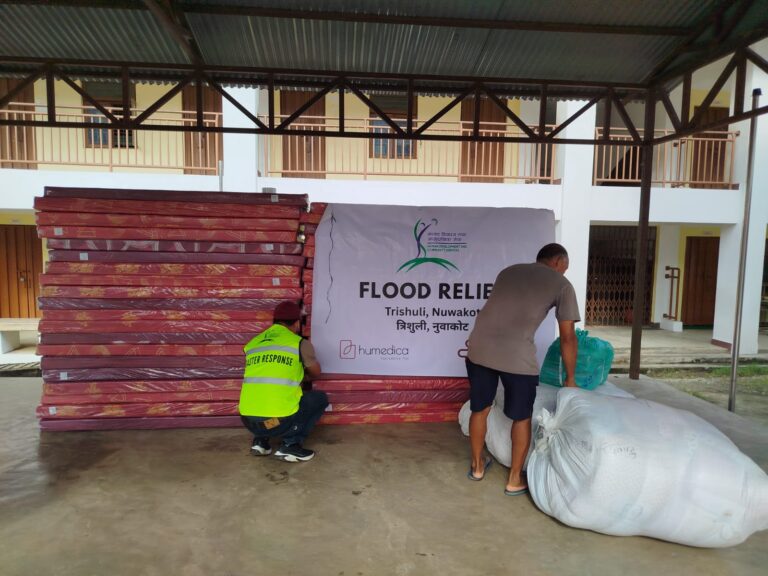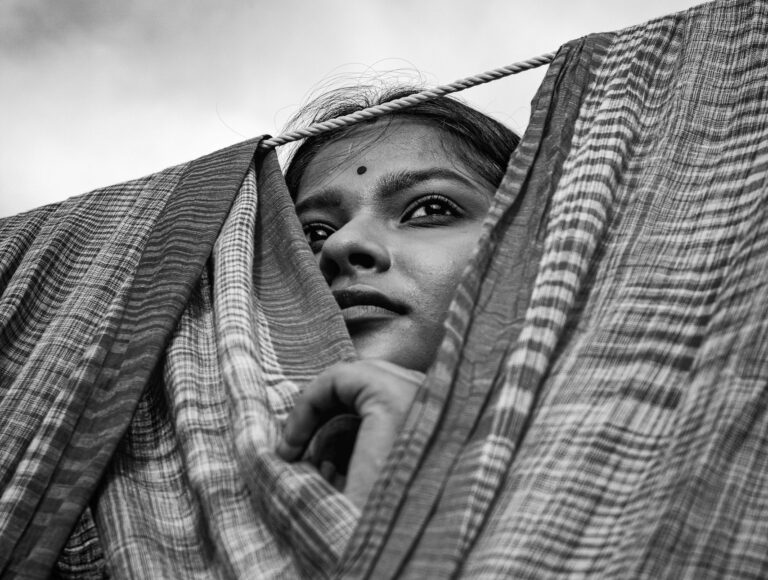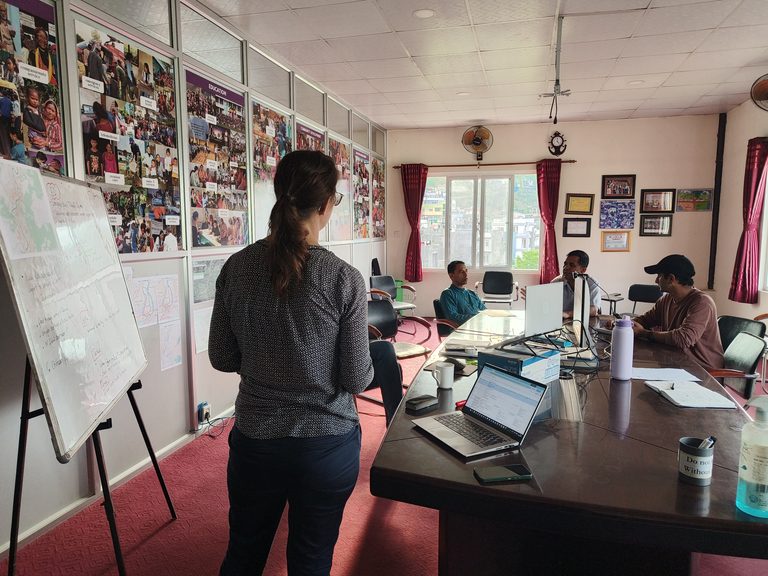

When torrential monsoon rains trigger flash floods and landslides across the rugged corridors of Rasuwa, the destruction unfolds within minutes. Along the swollen Trishuli River basin, terraced slopes disappear beneath thick mud and rock. Bridges shear from their foundations, homes collapse, and mountain settlements are cut off entirely. Among those left standing in the silt are children trying to comprehend a reality that shattered before their eyes.
Then the cameras arrive.
Before excavators could clear the boulder-choked tracks or dry rations could reach cut-off wards, high-end lenses were already unpacked. What followed in remote disaster pockets felt less like emergency documentation and more like flood tourism: digital crews and parachute reporters performing high-stakes drama, centering themselves in the frame, and detailing how they “risked their lives” to bring exclusive footage to the world.
Documentation serves an essential purpose in any crisis. It informs the public, exposes systemic neglect, mobilizes international assistance, and bears witness to suffering that might otherwise be ignored.
Yet, that ethical line is crossed the moment a camera is pushed into the face of a grieving child and an adult asks:
“Tell us what happened.”
“How did you feel when you lost your home?”
Or worse:
“What did you feel when the water took your mother?”
A child’s sorrow is not content. It is not a fundraising strategy. It is not marketing collateral.
The trauma behind the tears
Children experiencing disaster do not process trauma in the same way as emotionally regulated adults. In the immediate aftermath of a catastrophe, a child may appear silent, confused, detached, agitated, or emotionally numb. From a developmental and trauma-informed standpoint, these reactions are not vacancies waiting to be filled with questions they are the mind and body’s neurobiological attempt to cope with overwhelming shock.
At such a moment, the unconditional priority must be physical safety, stabilization, trusted relationships, and practical support not extracting a dramatic story.
Repeatedly pressuring a distressed child to describe terrifying experiences does not help them process what happened. Trauma-informed care emphasizes avoiding unnecessary probing and allowing children to communicate at their own pace, in environments where they feel safe and supported. A journalist or humanitarian communications officer is not a therapist, and a disaster site is not a counselling room.
Then there is the structural illusion of consent.
Can a frightened eight-year-old in a temporary camp truly comprehend what it means for their face, name, tears, and story to be uploaded to the internet and viewed by millions? Even when a child nods or answers, an insurmountable power imbalance exists between the minor and the adult holding the lens. A vulnerable child complies because an adult appears authoritative, because relief workers are nearby, or simply because they do not realize that refusal is an option.
Under Article 16 of the UN Convention on the Rights of the Child, every minor has a legally recognized right to protection from arbitrary interference with their privacy and honor. Crisis does not suspend international human rights; it makes their enforcement urgent.
And unlike the floodwaters of the Trishuli, digital content never recedes.
A photograph captured in seconds can remain searchable for decades. A child may eventually recover, grow, study, build relationships, and forge an identity far beyond the disaster. Yet the internet will continue presenting that person to the world through the most painful, broken moment of their childhood.
We must ask ourselves: Who gave us the right to make another person’s grief permanent?
The humanitarian sector must examine itself
It is easy to criticize sensational commercial journalism, but humanitarian organizations must also examine their own operational habits.
Non-governmental organizations and charities operate under legitimate pressure to communicate impact, demonstrate field needs, maintain donor confidence, and mobilize resources rapidly during emergencies. Field teams are routinely tasked with returning with photographs, testimonies, videos, and compelling human-interest stories.
The ethical crisis begins when compelling becomes synonymous with visible suffering.
A crying child generates attention. A story of acute loss generates donations. A photograph of raw devastation makes an emergency appeal emotionally potent. But operational effectiveness does not make an extractive communication practice ethical.
The core humanitarian principle of Do No Harm—enshrined across the Core Humanitarian Standard (CHS)—must apply not only to food distribution, emergency shelter, healthcare, and child protection, but equally to institutional storytelling.
Aid must never carry an implicit price tag of exposure.
A family should never feel that receiving a tarp or a food parcel requires performing their pain in front of a camera. A child must never be transformed into the emotional centerpiece of a fundraising campaign simply because vulnerability drives higher engagement. If our communication machinery depends upon displaying people at their most powerless to convince others to care, then our model of compassion is broken.
Humanitarian storytelling can inform and mobilize without being exploitative.
Four non-negotiable field boundaries
To ensure that media houses, aid agencies, and independent creators uphold basic dignity during crises, four operational boundaries must become universal practice:
1. Prioritize stabilization over documentation
When a child is separated from caregivers, injured, frightened, in shock, or visibly distressed, the only acceptable intervention is protection. Connect the child immediately with caregivers, child-protection personnel, temporary shelter, food, medical assistance, or psychosocial first aid. There will always be another photograph; there may never be another chance to keep that child safe from acute psychological harm.
2. Stop asking children to perform their trauma
Children should never be pressured to reconstruct the most terrifying moments of their lives for broadcast, social media, documentaries, or donor appeals. Responsible reporting investigates the conditions surrounding the disaster: infrastructure failures, interrupted schooling, clean water access, displacement logistics, child-protection safeguards, and the resilience of community-led relief.
3. Protect identity and preserve dignity
Not every story requires an identifiable face. Cameras can document sheared hillsides, ruined classrooms, relief logistics, temporary learning spaces, and community kitchens without invading personal boundaries. When children are featured, framing should emphasize their context and agency—never reduce them to helpless caricatures of misery.
4. Mandate psychological first aid for communications teams
A photographer working in a disaster zone is not merely operating hardware. A communications officer is not simply collecting assets. Their decisions directly affect people navigating profound vulnerability. Field teams require both the institutional training and the professional authority to recognize when the only ethical choice is to lower the camera.
Bearing witness without taking ownership
Rejecting exploitation does not mean disasters should go undocumented.
Independent journalism matters. Humanitarian communication matters. Rigorous reporting exposes negligence, testimonies hold authorities accountable, and evocative photography can mobilize urgent resources for neglected communities.
The question is not whether we tell stories of human suffering. The question is how and at whose expense we tell them.
There is a profound difference between bearing witness to a crisis with humility and extracting a child’s agony because it yields a more dramatic image. Children affected by Nepal’s floods and landslides do not need their distress packaged for public consumption. They need safe shelter, family tracing, transitional schooling, mental health support, and adults willing to defend their agency when they are least able to defend it themselves.
The ethical test for every journalist, photographer, NGO officer, and creator on the ground remains simple:
If this were my child, would I still take this photograph?
Would I ask the same question?
Would I upload the video?
Would I use those tears to raise money?
If our standards change the moment the child is our own, then our ethics were bankrupt from the start.
The true measure of compassion during a crisis is not how vividly we capture another person’s pain. It is how carefully we protect their humanity while telling the truth about what happened. Grief is intimate, fragile, and sacred. For a child standing among the ruins of everything that once felt safe, grief demands protection.
A child’s sorrow belongs entirely to the child enduring it never to an audience, an algorithm, a news cycle, or a fundraising campaign.
Text: Bibek Shrestha, Nepal